
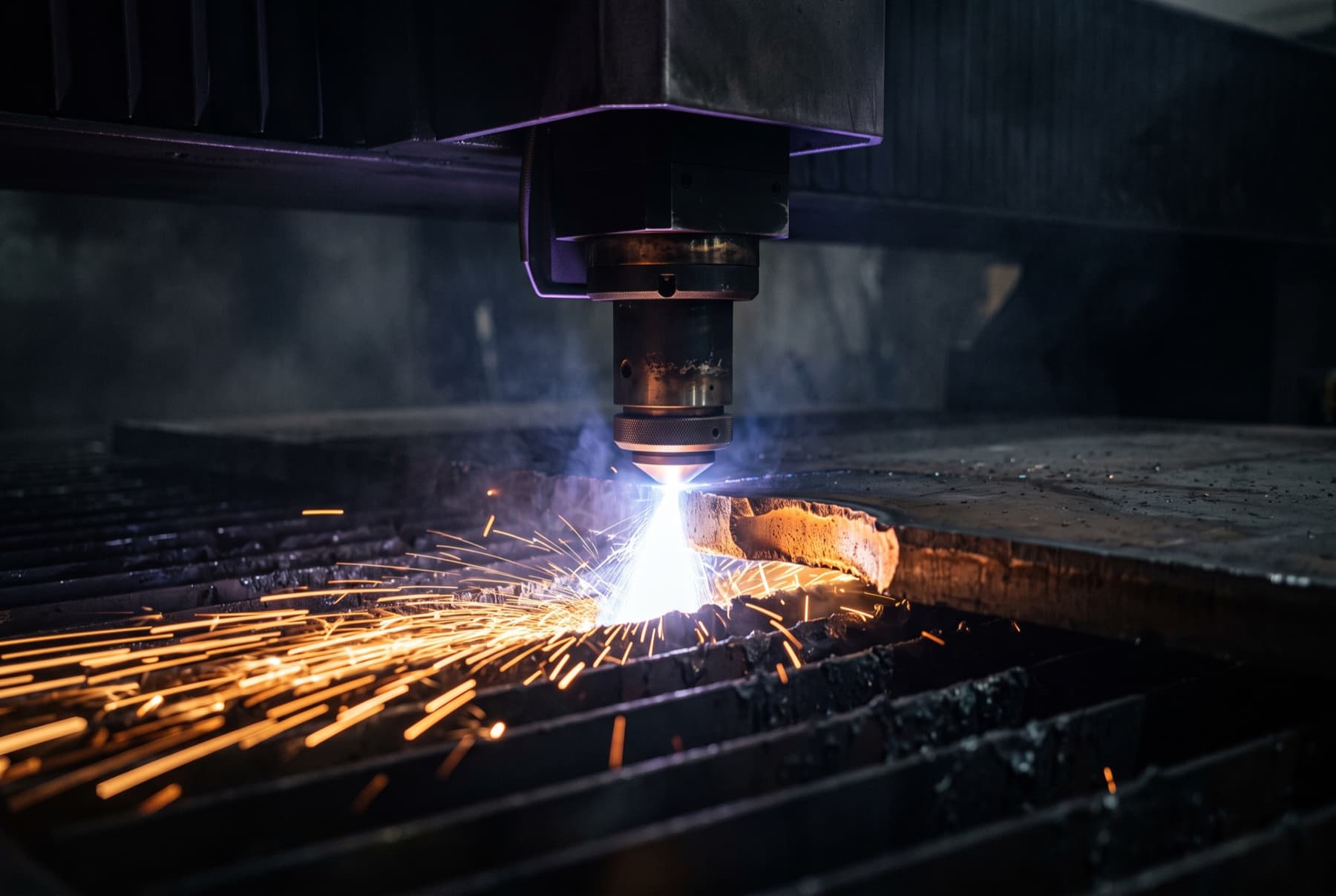
Over the past decades, laser-cut parts have become indispensable components across numerous industries. Their precise manufacturing and versatile applications make them key components in fields such as automotive manufacturing, aerospace, medical technology, electronics and construction. In this article, Laserteile Online looks at how laser-cut parts are used in these industries, the typical parts for each field, and the benefits of using them.
Automotive industry
In the automotive industry, laser-cut parts play a crucial role in manufacturing body components and frame structures. The high precision of laser cutting enables the production of complex parts with minimal tolerances, leading to improved fit accuracy and vehicle stability. Using laser-cut parts can also achieve weight savings, which reduces fuel consumption and increases efficiency.
Typical parts: body and structural panels, frame and reinforcement elements, brackets and mounts for add-on parts, and cut parts for jigs and fixtures used in vehicle production.
Aerospace industry
In the aerospace industry, laser-cut parts are used to produce lightweight components and structural elements. The ability to manufacture complex geometries with high accuracy is especially important for meeting strict weight and strength requirements. Laser-cut parts enable the production of components with optimised structures that are both light and robust, improving the performance of aircraft and spacecraft.
Typical parts: lightweight structural elements, brackets and fittings, and precisely cut parts with cut-outs that save weight without compromising strength.
Medical technology
In medical technology, laser-cut parts are used in the manufacture of medical devices and instruments. The precision of laser cutting enables the production of components with tight tolerances, which are essential for the functionality and safety of medical equipment. For example, laser-cut parts are used in endoscopes, surgical instruments and implants, where the highest accuracy and reliability are required.
Typical parts: components for endoscopes and surgical instruments, implant parts, and housing and carrier panels for medical devices – often made from stainless steel, which is easy to clean and sterilise.
Electronics industry
In the electronics industry, laser-cut parts are used to produce housings and support structures for electronic devices. The ability to cut complex shapes and fine details enables the manufacture of components that meet the requirements of modern electronics. Laser-cut parts help drive the miniaturisation of devices while increasing their performance.
Typical parts: device housings and covers, front panels with cut-outs for connectors and controls, mounting brackets and support structures, and ventilation panels with fine perforation patterns.
Construction and furniture industries
In construction, laser-cut parts are used to manufacture structural elements, railings and decorative components. The precision of laser cutting enables the production of parts with complex designs that are both functional and visually appealing. Laser-cut parts help improve the efficiency and quality of construction projects by shortening assembly times and increasing fit accuracy.
In the furniture industry, laser-cut parts are used to produce metal furniture and fittings. The ability to manufacture individual designs with high accuracy allows for bespoke furniture pieces that meet specific customer requirements. Laser-cut parts make it possible to realise creative and functional designs, used in both private and commercial settings.
Typical parts: railing infills and balcony cladding, façade and privacy screen elements, brackets and connecting plates in structural steelwork, and table frames, shelf supports and decorative cut-outs for furniture making.
The trend towards small batches and prototypes
The same trend shows up across every industry: products are becoming more individual, batch sizes smaller, development cycles shorter. This is exactly where laser cutting shows its strength – it needs no tools or moulds, so even a single part can be manufactured economically. Designers can quickly test prototypes and implement changes directly in the CAD file. Laserteile Online manufactures small batches and prototypes from a single part – and for large quantities, there are individual terms available in the large projects area from an order value of €5,000.
Benefits of laser-cut parts at a glance
- Precision: complex contours with minimal tolerances – for high fit accuracy during assembly
- Lightweight construction: optimised structures save weight without compromising strength
- Design freedom: from fine details to large-format cuts – with no tooling or mould-making required
- Efficiency: shorter assembly times thanks to precisely fitting parts, fast implementation of design changes
- Scalability: from prototype to small batch to large project, with the same process throughout
Conclusion
Laser-cut parts have established themselves as indispensable components across a range of industries. Their precise manufacturing and versatile applications help improve efficiency, quality and innovation in fields such as automotive manufacturing, aerospace, medical technology, electronics and construction. The continuing advancement of laser technology promises new applications and improvements in laser-cut part manufacturing in the future. To learn how the process works in detail and which materials are possible, see the laser cutting page.